Conversational AI for Workflows
Transformed High-Friction Workflows into Conversational Actions and trained an LLM on them
Background
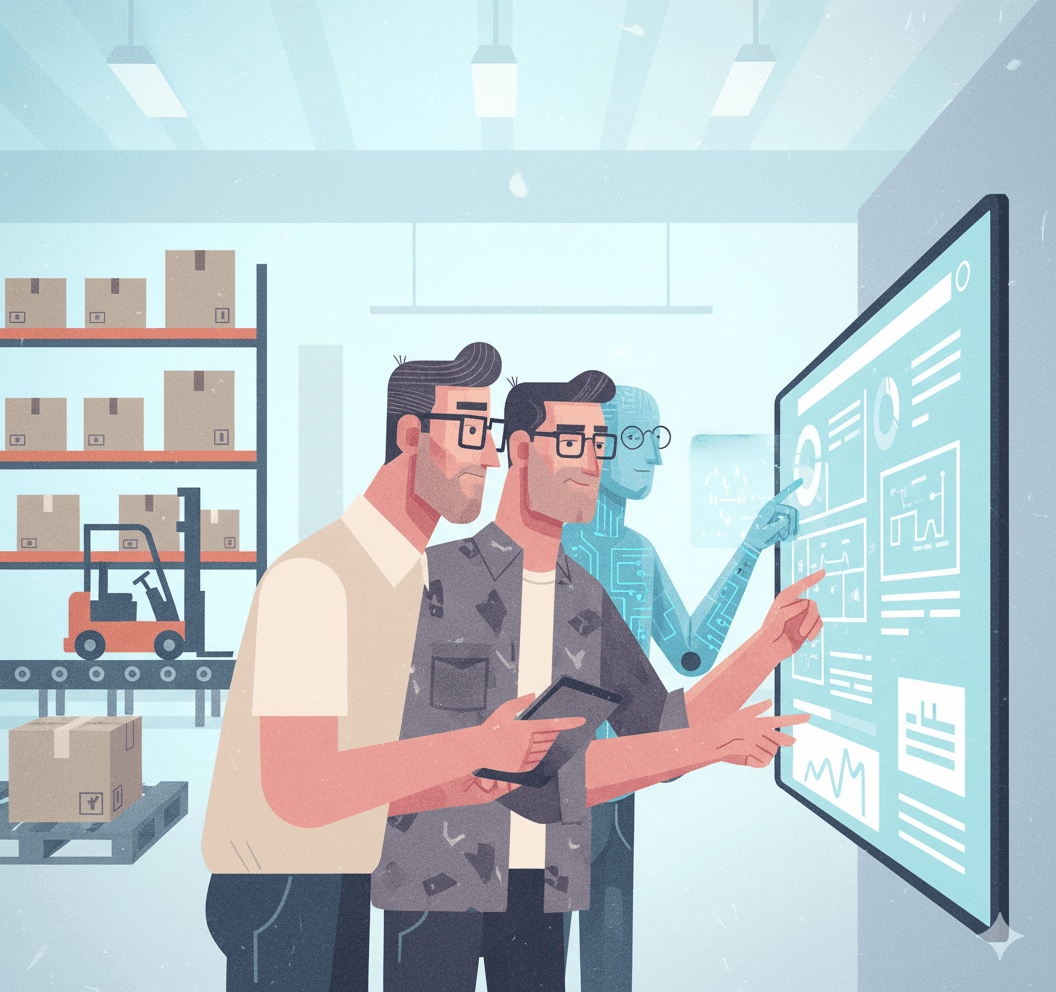
The platform is integrating an intelligent conversational assistant to simplify multi-step operational workflows. By allowing users to retrieve data, perform tasks, and navigate dashboards through natural language, it aims to reduce reliance on click-heavy interfaces and make operations more intuitive. This large language model is set to release next month, with the goal of enhancing adoption and usability across warehouse and logistics teams.
Problem Statement
Users experience friction with complex, multi-step dashboards. To ensure the LLM delivers immediate value at launch, it is necessary to identify and prioritize high-impact pain points and train the model on these critical workflows, enabling it to address user challenges effectively from day one.
Approach & Aim
Hypothesis
Prioritizing the AI copilot’s training on the most used, complex, and time-consuming dashboard flows will improve usability and adoption among target users.
Goal
The research aimed to identify top dashboard flows causing friction, segment users by usage and behavior, validate the need for a conversational assistant, inform AI training priorities and train the LLM.
Scope
In scope: dashboard flow analysis, user segmentation, survey design, training AI copilot on workflows. Out of scope: development of new AI features outside current dashboard flows.
Key Insights
Information-oriented heavy users are primary adopters of the AI assistant; they need step-by-step guidance and analytics support.
Top 10 most used, complex, and time-consuming flows highlight critical user pain points and was faster to train LLM on them
Survey feedback confirms strong interest in a conversational assistant for workflow simplification.
Step-by-step flow mapping significantly improves AI training efficiency and task accuracy.
Impact
Business Outcome
Increased efficiency in operational workflows, reduced errors, and higher adoption of AI-driven interactions for dashboard tasks.
Team Outcome
Data analytics team gained clear priorities for training and improving the AI assistant; engineering had structured flow-based guidance for automation.
Stakeholder Outcome
Alignment on high-impact flows, consensus on primary user segments, improved roadmap clarity for AI integration.